How is the account Cash Short and Over used?
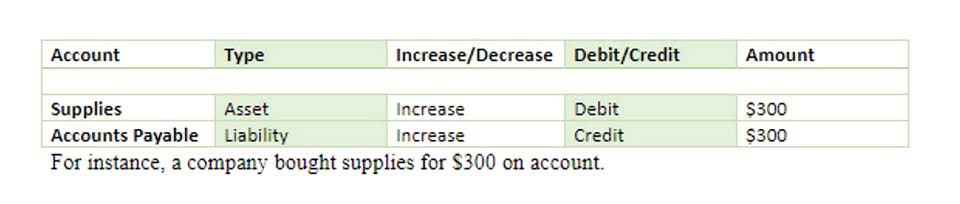
Let’s illustrate the Cash Short and Over account with the petty cash fund. Assume that the company has cash short and over is classified as a a petty cash fund of $100 and its general ledger account Petty Cash reports an imprest balance of $100. Let’s now assume that when the petty cash fund is replenished, there is $6.00 on hand and there are $93.00 of petty cash vouchers. Suppose a retail business starts each day with a cash balance of 100 in the cash register.

Double Entry Bookkeeping
This cash shortfall is recorded as a debit to the cash over and short account (which is an expense) and a credit to the petty cash or cash account (which is an asset reduction). Lastly, reconciliation refers to the process of comparing two sets of financial records from different sources to ensure their accuracy and consistency. This process can be applied to various aspects, such as bank reconciliations or reconciling accounts payable and accounts receivable. Cash over short is a result of reconciliation when discrepancies arise between the reported cash sales in an organization’s accounting system and the physical cash on hand.
5.2.1 Credit card and debit card payments in transit to a merchant
Cash over short mainly applies to cash-intensive industries like retail and banking sectors. It arises from discrepancies caused by human error, employee negligence or internal tampering when handling cash transactions. The concept of cash over and short is crucial in understanding discrepancies between a firm’s reported figures and its audited or adjusted figures.
What is the Cash Over and Short Account?
The journal entry to record this sale would debit cash for $101, credit sales for $100, and credit cash over short for one-dollar. In conclusion, this section provides a thorough examination of cash over short in relation to other essential accounting concepts. These seemingly small discrepancies can add up over time, making it essential for retailers to maintain accurate records and employ effective income summary internal controls to minimize cash over short instances. By closely monitoring and analyzing their cash-over-short accounts, firms can identify any potential issues and take corrective measures, ensuring a more transparent financial reporting process.
- Most retailers’ accounting systems have a cash over short account setup because they generally deal with cash sales everyday.
- Conversely, a credit in this account signifies that more cash was recorded compared to the actual cash received.
- In contrast, cash over short refers to an accounting discrepancy, where reported sales figures differ from audited figures.
- The journal entry for this sale would debit cash for $96, credit sales for $95, and credit cash over short for $1.
- It may seem like a small item to track, but think of it from the point of view of a retail or restaurant chain where millions of dollars pass through the cash registers every day.
For the past 52 years, Harold Averkamp (CPA, MBA) has worked as an accounting supervisor, manager, consultant, university instructor, and innovator in teaching accounting online. These materials were downloaded from PwC’s Viewpoint (viewpoint.pwc.com) under license. Once you have viewed this piece of content, to ensure you can access the content most relevant to you, please confirm your territory. PwC refers to the US member firm or one of its subsidiaries or affiliates, and may sometimes refer to the PwC network. This content is for general information purposes only, and should not be used as a substitute for consultation with professional advisors. Double Entry Bookkeeping is here to provide you with free online information to help you learn and understand bookkeeping and introductory accounting.

What Does Cash Over Short Mean?
When the company has the cash overage in the petty cash fund, it can make the journal entry by debiting the expenses account and crediting the cash over and short account together with the cash account. The cash overage or cash shortage may also come from the sale and other expense transactions too. However, to make it easy, we will only look at the petty cash transaction as the journal entry is usually the same.
- A salesperson might under-ring an item, resulting in the customer being given change exceeding the actual sale amount.
- Cash Over and Short reconciles what is in the cash drawer vs. what the cash register record says should be in the cash drawer.
- In conclusion, this section provides a thorough examination of cash over short in relation to other essential accounting concepts.
- In such cases, the cash register records more cash than the documented sales figure.
- These materials were downloaded from PwC’s Viewpoint (viewpoint.pwc.com) under license.
Cash Shortage Journal Entry
My Accounting Course is a world-class educational resource developed by experts to simplify accounting, finance, & investment analysis topics, so students and professionals can learn and propel their careers. Shaun Conrad is a Certified Public Accountant and CPA exam expert with a passion for teaching. After almost a decade of experience in public accounting, he created MyAccountingCourse.com to help people learn accounting & finance, pass the CPA exam, and start their career. Cash Over and Short acts as a Revenue account when there is an overage. It’s “other revenue” for you, not a normal source of revenue like your paycheck.

Cash over short is an essential accounting concept that represents the difference between a company’s reported figures and its audited financial statements. https://www.bookstime.com/articles/vendor-master-data-management It specifically pertains to discrepancies involving cash, particularly those arising from retail and banking environments due to their high volume of transactions. The term refers to both the occurrence itself and the account in the general ledger where these discrepancies are recorded. In summary, cash over short, float, petty cash, and reconciliation are all related concepts essential for maintaining accurate financial records.