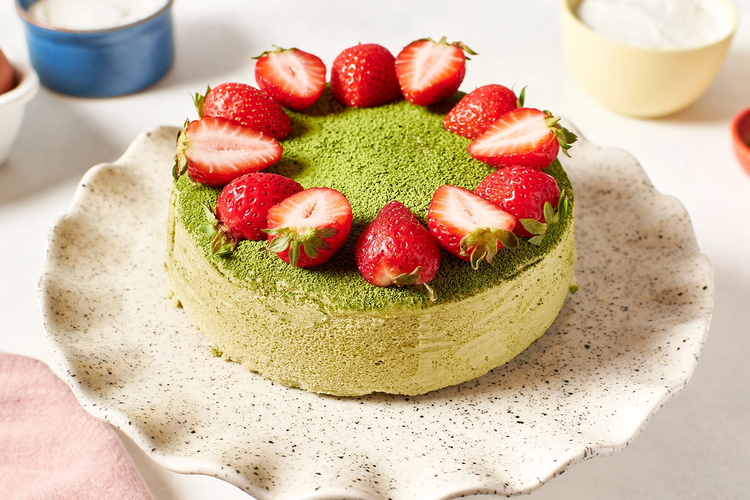
Light as a cloud and beautifully green from vibrant matcha, this Fluffy Japanese Matcha Soufflé Cheesecake brings together delicate flavor and airy texture in every bite
Prep time 30min
Cook time 65min
Servings 8
Ingredients:
1/2 cup cream cheese
1/2 cup greek yogurt
1 tablespoon canola oil
3 egg yolk
1 tablespoon cake flour
6 2/3 tablespoons milk
3 teaspoons matcha powder
3 egg whites
6 2/3 tablespoons granulated sugar
1 2/3 tablespoons potato starch
Directions:
Step 1
Preheat the oven to 390°F.
Step 2
In a bowl, combine Greek yogurt, cream cheese, canola oil, egg yolks, and cake flour. Whisk until smooth.
Step 3
Heat milk in a saucepan to 175°F, and then sift the matcha with a sieve into the milk. Whisk until the matcha is smooth with no clumps. Heating the milk will help bloom the matcha, and passing the matcha through a sieve will help prevent the matcha from clumping.
Step 4
Add the matcha mixture to the yogurt mixture and whisk until evenly incorporated.
Step 5
In a separate bowl, make a meringue by adding egg whites, granulated sugar, and potato starch, and beat with a hand mixer until stiff peaks form.
Step 6
Fold 1/3 of the meringue at a time into the yogurt mixture until combined. Continue until all of the meringue has been combined.
Step 7
Line a six-inch cake tin with parchment paper and pour in the matcha yogurt mixture. To form a water bath, place the cake tin within another cake pan and then fill the pan with hot, but not boiling, water. A water bath is used to create a gentle, moist, and even baking environment, which helps prevent cracking and sinking, and results in a smoother, creamier texture.
Step 8
Bake in preheated oven for 15 minutes, then reduce temperature to 260°F and continue baking for 50 minutes. Keep the pan in the oven for the entire bake even when you reduce the temperature.
Step 9
Once the bake is done, turn off the oven and keep the cheesecake in the oven for 30 minutes to let cool. This gradual cooling will help prevent a sudden temperature change that can cause the cheesecake to collapse or crack.
Step 10
Take the cheesecake out to serve, and enjoy!
1. Meringue technique:
- Target medium-stiff peaks: Whip egg whites until they hold their shape with a tip that bends slightly. Over-whipped meringue becomes dry and hard to fold without losing volume.
- Keep equipment oil-free: Any residual oil or egg yolk in your bowl will keep the whites from whipping properly.
2. Water bath method:
- Use hot water: Fill the outer pan with hot (not boiling) water halfway up the cake tin. Cold water lowers oven temps; boiling water can cause the top to crack.
- Leak-proof your pan: If using a springform pan, wrap the outer base with two or three layers of heavy-duty foil to block water from seeping in.
3. Cooling & texture:
- Expect slight shrinkage: The cake will naturally deflate a bit as it cools. This is normal for soufflé cakes.
- Chill before serving: While edible warm, chilling the cake overnight sets the structure, changing the texture from a light foam into a smooth, creamy crumb.
Note
Greek yogurt plays a starring role, adding a subtle tang while helping create the cake’s signature creamy, melt-in-your-mouth crumb. In addition to providing high-quality protein and important nutrients like calcium, many Greek yogurts contain live and active cultures that can help support gut health. Paired with smooth cream cheese and milk, this elegant dessert is a delicious way to enjoy the wholesome goodness of real dairy while sharing a treat that feels both comforting and refined.